The Carnavalet Museum
- SUBSCRIBE
- ALREADY SUBSCRIBED?
BECOME A BONJOUR PARIS MEMBER
Gain full access to our collection of over 5,000 articles and bring the City of Light into your life. Just 80 USD per year.
Find out why you should become a member here.
Sign in
Fill in your credentials below.
 This is the magnificent sixteenth century townhouse devoted to the history of Paris. The ‘Hotel’ now encompasses the old Hotel Peletier, which adds 20th century interiors to the 17th century façade. Both the gardens and the buildings awe its visitors. And inside is a collection second to none with artifacts from Roman and Medieval Paris through to the present. Besides a room dedicated to Jean Jacques Rousseau and the Convention Room of Georges Danton, there is Art Nouveau jewelry, a ballroom and a chance to see documents that made Paris what it is today. Ancient clocks still chime, the furnishings are stylish and the art pleasing. Don’t miss it.
It was not crowded when I visited but after lunch school groups began to arrive. This is the perfect place to trace Paris’s history from a tiny community on the Ile de la Cite to the city it is today. Tiny models show what is no longer there. They were painstakingly created as are the larger models of omnibuses and other artifacts.
Interior:
The rooms are decorated in the style of the time with intricate and colorful plasterwork and art worked right into the plaster molding. Many of the rooms have blinds on the windows for protection but they are well lit from the inside and easy to see. I especially liked the statuary of actresses and politicians and writers. Access is easy with timed divisions in different rooms. There are portraits of the Kings and Queens, wherein one can see the arrogance of the nobility.
Our Opinion:
Features include: sculptures found during the Gallo-Roman period, Paris in the Middle Ages (closed for refurbishment this winter), Paris in the 16th century, the 17th century showing many major construction programs including the Sorbonne, Palace of Luxembourg, the 18th century includes the Reign of Louis XV and XVI and a section dedicated to the Revolution and the storming of the Bastille.
Paris in the 19th century deals with the Commune and the rebuilding of Paris with the work of Houssmann and the Opera Garnier, Les Invalides and Place Vendome.
The 20th century deals with paintings of Cocteau and other luminaries but don’t overlook Marcel Proust’s bedroom and the bed from which he wrote, “A la recherche du temps perdu”.
I always recommend this museum. The people are friendly, the buildings are worth walking through and the displays are vast. There are free cloak rooms and the admission is free for the general exhibitions. I do recommend that you do it in two sections as there is so much to see. I entered in the mid morning, stopped for lunch and returned in the afternoon. Do bring your camera but turn off the flash and don’t be surprised if you see people set up their easels and work at copying a painting. You require permission to do that and space is often limited for painters.
The exhibition is divided by time period.
Facades and Grounds:
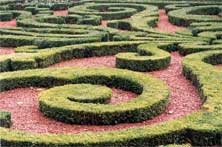
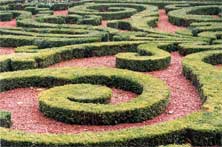
Best viewed in the summer. The main courtyard with a king’s statue or the various gardens show how the wealthy lived at that time. I especially enjoy walking along the outside of the south wall. Here you come to the ornate iron gate with coat of arms leading to a sumptuous garden. I have photographed it a dozen times. Remember, these Hotels Particuliers were meant to show a certain opulence.
Caution:
There is limited access in only some rooms for the disabled but for others it is easy to get around and avoid the crowds. Go early before the groups or after they are gone.
The teenager groups were well behaved. The small children were filled with the exuberance expected of them. Most museums are more crowded.
Address:
23 rue de Sévigné
Paris 70003
Tel: 01 44 59 58 58
Fax: 01 44 59 58 11
Minimum Time:
Two to three hours. Longer for history buffs and it is suggested that you do part on one day and the other another day.
Getting There:
Metro station: Saint-Paul or Chemin Vert
Bus: 29,69,76,96
It is a short walk from Place des Vosges and rue de Rosiers in the Marais.
Tours:
These can be arranged in advance by calling ahead. Often there is someone free to show you around.
Hours:
Open 10 am to 6 pm daily except Monday and some public holidays
Some rooms are open on alternate days
For Info. call: 01 44 59 58 58
Cost:
Admission to the permanent collection is free.
An admission fee is charged for temporary exhibitions.
Parking:
There are facilities throughout the Marais but this is an especially crowded area.
Public transportation is recommended.
Disability:
There are facilities in some areas only and elevators are in one wing only. Call ahead for details.
Toilets:
Mostly on the main floor but well marked.
Various:
There are children’s activities, workshops, cultural activities for all ages, plays, concerts and dedications. Call 01 44 59 58 31 or 01 44 59 58 33
For print collections enter at 29, Rue de Sévigné, Tuesday – Friday 2 pm – 5 pm or call for an appointment at 01 44 59 58 67
There is also a bookshop set in a beautiful room across from the entrance, open during museum hours.
Related Articles