La Montagne Sainte-Geneviève in the 5th
1750
November
1 and 11 are holidays in France. November is not as good as May, but
after all, in May you get up to 4 paid holidays. It’s not a sure thing
since the Catholic holidays related to Easter are, in the end, tied to
the Jewish lunar calendar. So the date changes from year to year. But
in May you’ve got at least May 1, May 8 and Ascension. Pentecost
sometimes falls in May, sometimes in early June. I’m not complaining. This
November 11, I had planned to do a walking tour that had been written
up in my weekly arts and television guide, Télérama. I call Télérama an
“only in France” publication. By this, I mean it’s an ultra left-wing
socialist, ultra progressive television guide, published by the
Catholic Press (it’s hard to imagine the Catholic Church in the U.S.
ever publishing a magazine with, even once, art photos displaying nude
female breasts), that basically tells you why you should not watch
television. It’s an institution and très intello. I “religiously”
follow the film reviews and by now have learned to decipher the codes.
“This is an American, superficial, overly sentimental film.” (“Wow,
this sounds wonderful, funny and sincere.”) Or, “What an insightful
study of the dark psychology of a tortured soul.” (“Good Lord, you
couldn’t pay me to see this artsy fartsy pretentious film.”) I
subscribe to Télérama and eagerly await each issue. At
any rate, I wanted to follow their guided tour of the 5th
arrondissement, covering an area with history dating from Roman through
Medieval times. It was written in true French for the French style.
What this means is that the bare essentials are given, but “you’re
supposed to know” all the background and/or fill in all the gaps
yourself. Thank goodness I have a detailed map of Paris–one of those
red booklet things that has one or two pages for each arrondissement
and is for sale at any newsstand in Paris. Using that, I assiduously
read the tour and added in the missing details and directions. I
phoned a friend that morning simply to say hello and we decided to do
the tour together. This friend happens to be the friend with the
Doberman (see “Three Dobies in the Bar”).
The dog’s name is Django, and I would say that the animal he most
resembles is a deer. In short, he is a noble dog and wouldn’t hurt a
fly (although I wouldn’t recommend threatening my friend in any way, or
put yourself next to a cat). It’s like following a rock star on tour.
French people do not normally smile at strangers. In fact, they do not
often see anyone outside their immediate circle. They do, however, see
Django. And smile and say hello and even talk to us. It’s a nice change
from being invisible. Following
in Django’s wake, we took the Métro to Cluny where the walking tour
began. Officially you’re not allowed to take dogs in the Métro, except
if the dog is carried in a sac. This is a bit unrealistic with a
Doberman pinscher. But I guess all the security guys are dog lovers,
since not one has ever said a word to my friend. So we arrived bright
and eager at Cluny, admired the beautiful fall day, and looked forward
to a two-hour walk immersed in the past. Because Django was with us,
and also by choice, we decided not to go inside any monuments. If you
do, allow more time, of course. Here’s how the tour went, including the
missing “details” not mentioned in Télérama! At
Cluny, the tour begins with the remains of Roman thermal baths just
outside the Museum of the Middle Ages. Then you need to find the rue de
la Montagne Sainte-Geneviève. Walk down the boulevard Saint Germain as
it goes alongside the Museum’s medieval garden, planted fairly recently
using graphic and written references to flowers and plants of that
period. Continue to the Métro Maubert where the rue de la Montagne
Sainte-Geneviève begins and turn right. This is one of those Parisian
streets that hasn’t changed much since the Middle Ages. At the top is a
small, hidden square facing the garden of the former école
Polytechnique. There take the rue Descartes, sloping gently downhill,
and turn left onto the rue Clovis. Further down the rue Clovis are the
remains of Philippe Auguste’s protective wall that encircled Paris in
the 12th century. Very chunky and medieval looking. Turn
left at rue Cardinal-Lemoine, and at the Métro of the same name turn
right onto rue Monge. Down this street, on the left side, is an
entrance to the Arènes de Lutèce–the remains of a Roman arena that
seated between 10-15,000 people all gathered together to enjoy
gladiator fights and/or dramatic spectacles. At the other side of the
arena, we had to wander around a bit (even with the map) before finding
the rue Rollin. We eventually found it at one end of the rue Navarre,
beginning with steps going up. After the climb, you’re on a pedestrian
street that, like rue de la Montagne Sainte-Geneviève, has basically
remained unchanged since the Middle Ages. René Descartes used to live
at No. 14 (which has a very impressive door). At
the end of rue Rollin is the Place de la Contrescarpe. The name goes
back to the Middle Ages when one of the gates in Philippe Auguste’s
wall around Paris stood just beyond the Place. Outside the gate was a
moat that rose to another earthen wall or counter escarpment, thus the
name. I love to imagine those days when the area on the other side of
the moat was a no-man’s land, and even the square was dark and
dangerous at night. It’s rather amusing when you look at the Place
today–one of the safest, most charming and touristy area in Paris. From
the Place de la Contrescarpe, take the rue Blainville, then the rue
l’Estrapade and you’ll find yourself in the middle of a labyrinth of
streets where medieval scholars once held sway. Turn right on the rue
Clotilde that runs along the Lycée Henri IV, built in what was once the
powerful royal Abbey Sainte-Geneviève, founded by Clovis himself. At
the summit of the hill is the imposing mass of the Pantheon, originally
meant to be the new church of…
- SUBSCRIBE
- ALREADY SUBSCRIBED?
BECOME A BONJOUR PARIS MEMBER
Gain full access to our collection of over 5,000 articles and bring the City of Light into your life. Just 80 USD per year.
Find out why you should become a member here.
Sign in
Fill in your credentials below.
 November
1 and 11 are holidays in France. November is not as good as May, but
after all, in May you get up to 4 paid holidays. It’s not a sure thing
since the Catholic holidays related to Easter are, in the end, tied to
the Jewish lunar calendar. So the date changes from year to year. But
in May you’ve got at least May 1, May 8 and Ascension. Pentecost
sometimes falls in May, sometimes in early June. I’m not complaining.
This
November 11, I had planned to do a walking tour that had been written
up in my weekly arts and television guide, Télérama. I call Télérama an
“only in France” publication. By this, I mean it’s an ultra left-wing
socialist, ultra progressive television guide, published by the
Catholic Press (it’s hard to imagine the Catholic Church in the U.S.
ever publishing a magazine with, even once, art photos displaying nude
female breasts), that basically tells you why you should not watch
television. It’s an institution and très intello. I “religiously”
follow the film reviews and by now have learned to decipher the codes.
“This is an American, superficial, overly sentimental film.” (“Wow,
this sounds wonderful, funny and sincere.”) Or, “What an insightful
study of the dark psychology of a tortured soul.” (“Good Lord, you
couldn’t pay me to see this artsy fartsy pretentious film.”) I
subscribe to Télérama and eagerly await each issue.
November 11, I had planned to do a walking tour that had been written
up in my weekly arts and television guide, Télérama. I call Télérama an
“only in France” publication. By this, I mean it’s an ultra left-wing
socialist, ultra progressive television guide, published by the
Catholic Press (it’s hard to imagine the Catholic Church in the U.S.
ever publishing a magazine with, even once, art photos displaying nude
female breasts), that basically tells you why you should not watch
television. It’s an institution and très intello. I “religiously”
follow the film reviews and by now have learned to decipher the codes.
“This is an American, superficial, overly sentimental film.” (“Wow,
this sounds wonderful, funny and sincere.”) Or, “What an insightful
study of the dark psychology of a tortured soul.” (“Good Lord, you
couldn’t pay me to see this artsy fartsy pretentious film.”) I
subscribe to Télérama and eagerly await each issue.
At
any rate, I wanted to follow their guided tour of the 5th
arrondissement, covering an area with history dating from Roman through
Medieval times. It was written in true French for the French style.
What this means is that the bare essentials are given, but “you’re
supposed to know” all the background and/or fill in all the gaps
yourself. Thank goodness I have a detailed map of Paris–one of those
red booklet things that has one or two pages for each arrondissement
and is for sale at any newsstand in Paris. Using that, I assiduously
read the tour and added in the missing details and directions.
any rate, I wanted to follow their guided tour of the 5th
arrondissement, covering an area with history dating from Roman through
Medieval times. It was written in true French for the French style.
What this means is that the bare essentials are given, but “you’re
supposed to know” all the background and/or fill in all the gaps
yourself. Thank goodness I have a detailed map of Paris–one of those
red booklet things that has one or two pages for each arrondissement
and is for sale at any newsstand in Paris. Using that, I assiduously
read the tour and added in the missing details and directions.
I
phoned a friend that morning simply to say hello and we decided to do
the tour together. This friend happens to be the friend with the
Doberman (see “Three Dobies in the Bar”).
The dog’s name is Django, and I would say that the animal he most
resembles is a deer. In short, he is a noble dog and wouldn’t hurt a
fly (although I wouldn’t recommend threatening my friend in any way, or
put yourself next to a cat). It’s like following a rock star on tour.
French people do not normally smile at strangers. In fact, they do not
often see anyone outside their immediate circle. They do, however, see
Django. And smile and say hello and even talk to us. It’s a nice change
from being invisible.
phoned a friend that morning simply to say hello and we decided to do
the tour together. This friend happens to be the friend with the
Doberman (see “Three Dobies in the Bar”).
The dog’s name is Django, and I would say that the animal he most
resembles is a deer. In short, he is a noble dog and wouldn’t hurt a
fly (although I wouldn’t recommend threatening my friend in any way, or
put yourself next to a cat). It’s like following a rock star on tour.
French people do not normally smile at strangers. In fact, they do not
often see anyone outside their immediate circle. They do, however, see
Django. And smile and say hello and even talk to us. It’s a nice change
from being invisible.
Following
in Django’s wake, we took the Métro to Cluny where the walking tour
began. Officially you’re not allowed to take dogs in the Métro, except
if the dog is carried in a sac. This is a bit unrealistic with a
Doberman pinscher. But I guess all the security guys are dog lovers,
since not one has ever said a word to my friend. So we arrived bright
and eager at Cluny, admired the beautiful fall day, and looked forward
to a two-hour walk immersed in the past. Because Django was with us,
and also by choice, we decided not to go inside any monuments. If you
do, allow more time, of course. Here’s how the tour went, including the
missing “details” not mentioned in Télérama!
in Django’s wake, we took the Métro to Cluny where the walking tour
began. Officially you’re not allowed to take dogs in the Métro, except
if the dog is carried in a sac. This is a bit unrealistic with a
Doberman pinscher. But I guess all the security guys are dog lovers,
since not one has ever said a word to my friend. So we arrived bright
and eager at Cluny, admired the beautiful fall day, and looked forward
to a two-hour walk immersed in the past. Because Django was with us,
and also by choice, we decided not to go inside any monuments. If you
do, allow more time, of course. Here’s how the tour went, including the
missing “details” not mentioned in Télérama!
 At
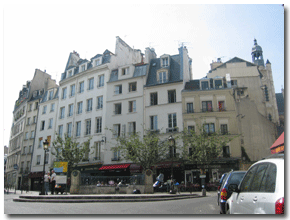
AtCluny, the tour begins with the remains of Roman thermal baths just
outside the Museum of the Middle Ages. Then you need to find the rue de
la Montagne Sainte-Geneviève. Walk down the boulevard Saint Germain as
it goes alongside the Museum’s medieval garden, planted fairly recently
using graphic and written references to flowers and plants of that
period. Continue to the Métro Maubert where the rue de la Montagne
Sainte-Geneviève begins and turn right. This is one of those Parisian
streets that hasn’t changed much since the Middle Ages. At the top is a
small, hidden square facing the garden of the former école
Polytechnique. There take the rue Descartes, sloping gently downhill,
and turn left onto the rue Clovis. Further down the rue Clovis are the
remains of Philippe Auguste’s protective wall that encircled Paris in
the 12th century. Very chunky and medieval looking.
Turn
left at rue Cardinal-Lemoine, and at the Métro of the same name turn
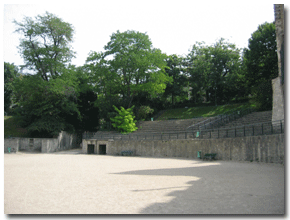
right onto rue Monge. Down this street, on the left side, is an
entrance to the Arènes de Lutèce–the remains of a Roman arena that
seated between 10-15,000 people all gathered together to enjoy
gladiator fights and/or dramatic spectacles. At the other side of the
arena, we had to wander around a bit (even with the map) before finding
the rue Rollin. We eventually found it at one end of the rue Navarre,
beginning with steps going up. After the climb, you’re on a pedestrian
street that, like rue de la Montagne Sainte-Geneviève, has basically
remained unchanged since the Middle Ages. René Descartes used to live
at No. 14 (which has a very impressive door).
left at rue Cardinal-Lemoine, and at the Métro of the same name turn
right onto rue Monge. Down this street, on the left side, is an
entrance to the Arènes de Lutèce–the remains of a Roman arena that
seated between 10-15,000 people all gathered together to enjoy
gladiator fights and/or dramatic spectacles. At the other side of the
arena, we had to wander around a bit (even with the map) before finding
the rue Rollin. We eventually found it at one end of the rue Navarre,
beginning with steps going up. After the climb, you’re on a pedestrian
street that, like rue de la Montagne Sainte-Geneviève, has basically
remained unchanged since the Middle Ages. René Descartes used to live
at No. 14 (which has a very impressive door).
 At
Atthe end of rue Rollin is the Place de la Contrescarpe. The name goes
back to the Middle Ages when one of the gates in Philippe Auguste’s
wall around Paris stood just beyond the Place. Outside the gate was a
moat that rose to another earthen wall or counter escarpment, thus the
name. I love to imagine those days when the area on the other side of
the moat was a no-man’s land, and even the square was dark and
dangerous at night. It’s rather amusing when you look at the Place
today–one of the safest, most charming and touristy area in Paris.
From
the Place de la Contrescarpe, take the rue Blainville, then the rue
l’Estrapade and you’ll find yourself in the middle of a labyrinth of
streets where medieval scholars once held sway. Turn right on the rue
Clotilde that runs along the Lycée Henri IV, built in what was once the
powerful royal Abbey Sainte-Geneviève, founded by Clovis himself.
the Place de la Contrescarpe, take the rue Blainville, then the rue
l’Estrapade and you’ll find yourself in the middle of a labyrinth of
streets where medieval scholars once held sway. Turn right on the rue
Clotilde that runs along the Lycée Henri IV, built in what was once the
powerful royal Abbey Sainte-Geneviève, founded by Clovis himself.
At
the summit of the hill is the imposing mass of the Pantheon, originally
meant to be the new church of the Abbey. Commissioned by Louis XV in
1744, it took so long to build that it was completed just before the
Revolution and was then co-opted to honor “Great Men.” The facades of
the Mairie of the 5th arrondissement and the Faculté de droit create an
imposing symmetry opposite the Library Sainte-Geneviève where thousands
of books and manuscripts from the former abbey have been preserved.
the summit of the hill is the imposing mass of the Pantheon, originally
meant to be the new church of the Abbey. Commissioned by Louis XV in
1744, it took so long to build that it was completed just before the
Revolution and was then co-opted to honor “Great Men.” The facades of
the Mairie of the 5th arrondissement and the Faculté de droit create an
imposing symmetry opposite the Library Sainte-Geneviève where thousands
of books and manuscripts from the former abbey have been preserved.
 To
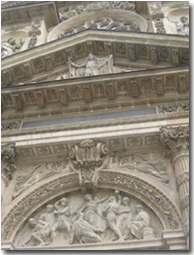
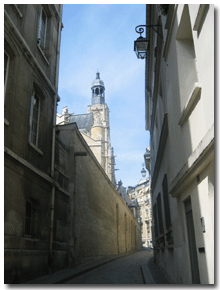
Tothe left of the Pantheon is the église Saint-Etienne-du-Mont. After the
severity of the other buildings, it’s fun to stare at the over-the-top
Renaissance facade of this church. Inside, among other treasures, are a
reliquary of Sainte Geneviève, containing a fragment of her
sarcophagus, and the only rood screen in Paris. Then take the rue
Soufflot, which you can find quite easily by circling around since it’s
the widest street leading from the Pantheon. It cuts across the rue
Saint Jacques, the ancient Roman road leading north-south. Turn right
on the rue Saint Jacques (with a beautiful view of the green dome of
the Sorbonne) and then an immediate left on the rue Cujas, the main
east-west street in Roman times. It was at this crossroads that once
stood the Forum of Lutetia, or Roman Paris. Just before you reach the
boulevard Saint Michel, turn into the monumental square bordered on one
end by the Sorbonne Chapel. At the other end of the square is the
boulevard Saint Michel with the Jardin du Luxembourg just across the
street.
At the end of our tour,
I realized once again what a long and complex history lies just before
our eyes in Paris. It reveals itself when we really take the time to
look at it.
I realized once again what a long and complex history lies just before
our eyes in Paris. It reveals itself when we really take the time to
look at it.
—
 Jeanne
Feldman is an intercultural specialist working with English-speaking
expatriates to help them integrate into French life, both
professionally and personally. She also works with French executives
who need to communicate internationally. Her website is: http://www.jeanne-feldman.com
Jeanne has also written a shopping guide, Best Buys and Bargains in Paris.
Related Articles