Etiquette for Foreign Guests Dining in a French Home

- SUBSCRIBE
- ALREADY SUBSCRIBED?
BECOME A BONJOUR PARIS MEMBER
Gain full access to our collection of over 5,000 articles and bring the City of Light into your life. Just 60 USD per year.
Find out why you should become a member here.
Sign in
Fill in your credentials below.
 After reading this, see Part II with even more etiquette tips by Karen.
You’ve been invited to the home of a friend or colleague for dinner and are wondering what’s correct and what’s not when being entertained by the French. After all, cultural differences run deep and dark and you want to be prepared.
If you’ve read books by experts that detail etiquette Do’s and Don’ts, some said you shouldn’t ask to be excused from the table, even to go to the powder room. And at the end of the dinner, men and women were expected to go to different salons. Excellent advice . . . way back when.
You don’t want to insult your hosts, but it’s a new world. Nobody will mind if you excuse yourself once during a three-hour meal to go to the WC, but never for a phone call, that’s rude unless you have a sick child or it’s a true emergency and work doesn’t qualify. It’s been a long time since I’ve been to a dinner where men and women separated after dinner. They may choose to, but that’s a whole different story.
Here are some contemporary dining practices to guide a foreign guest.
The 15-minute rule
The 15-minute rule appears to be the law of the day. Many French dependent upon public transportation and parking hassles typically ran late. If you showed up at the appointed hour, chances were fair you’d end up in the sitting room waiting for your host to appear. That’s no longer the case, perhaps because fewer people have help or dinners catered. If you’re much later than 15 minutes, you’ll probably score a dirty look or two. If you’re running substantially later, call to inform your host of your dilemma and ask them to start without you. They rarely will, especially because they expect to spend time over drinks and nibbles before sitting down at the dinner table.
Remember to request the host’s entry codes
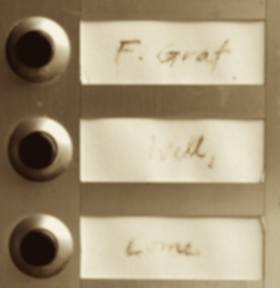
Remember to request the door code, apartment number and phone number. When you receive the address, you’ll undoubtedly be given a code to the front door if invited to a central Paris address. Then there may be directions to go to a specific building or to proceed through the courtyard. There may be another code and, if you’re instructed to ring a buzzer, it’s not unheard of that the name on it isn’t the one you expected. Don’t assume you’re going to wing it. Unless it’s a big party you may be left out in the cold (or the hot). Be sure to have your host’s phone number.
These instructions are important because you don’t want to make an entrance looking as if you’ve been lost. If you have a portable (cell phone), you can call. Calling for directions may not appear as sophisticated as you’d like; but on the other hand, some buildings can be mazes and you don’t want to stand outside yelling a person’s name. It’s not comme il faut—and your hosts probably won’t hear you anyway.
The emphasis in on dinner, not grazing on appetizers
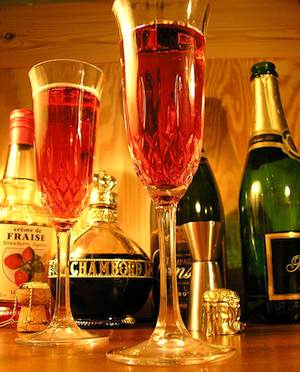
Don’t expect lots of appetizers and a full bar. Some Americans are surprised about the lack of nibbles before dinner. Some nuts, olives and uninteresting looking pretzels don’t signify you’re not welcome the French simply don’t like guests to ruin their appetites pre-dinner. It’s an insult to say the French are cheap.
The same holds true for beverages. Frequently, there’s a tray of flutes waiting to be filled with Champagne to begin the evening. There may be a bottle of Port, Whiskey and orange juice. Dinner is the main event, and a full bar or cocktail service is rare.
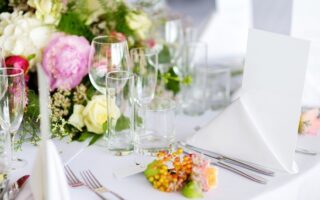
Dinner usually consists of a first course (une entrée), the main course (le plat principal), cheese and/or salad, and then dessert. Bread is served throughout the meal and, if it’s a formal dinner, it’s placed on your napkin or directly on the tablecloth.
For those of us accustomed to bread plates, this may feel informal, but it’s proof the linens will be washed and starched before they’re used again.
A few words about wine
Understand food-wine pairings. Wine glorious wine. More than likely red and a white wine will be offered. The larger glass is for the red so the wine can breathe and the smaller glass is for the white.
If you choose not to drink for whatever reason, don’t. And, you don’t need to make excuses. If water isn’t served, request it. Period, the end. Do not turn your glass upside down, it’s considered rude.
Host gift suggestions
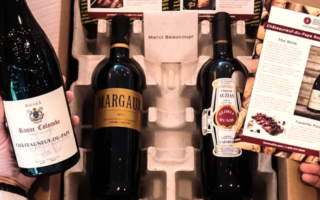
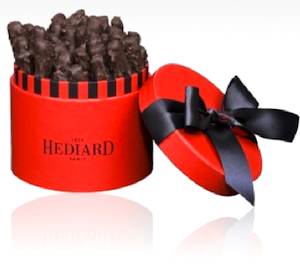 The same books that advise not to excuse yourself to go to the WC also say you shouldn’t bring wine as a gift because it implies you think the host’s wine cellar is inadequate. Unless a member of the Rothschild family has invited you to dinner, go for it. Don’t take “plonk,” but a fine wine or Champagne is always appreciated. Make sure you say it’s to be used later because the wines for that night’s dinner have already been chosen.
You may present your host a flowering plant, but do not bring cut flowers because they require more work for your host (arranging, not to mention to finding a vase), and who needs something else to juggle while entertaining? The same books advise sending flowers the day after the party, but who needs flowers if the home has more than its fair supply?
Chocolates, scented candles, a book about something you feel would interest your host, foie gras, special soaps for the guest bath or something memorable from your travels. You have more options if there are children or pets.
If you’re feeling uninspired, head to the gourmet section at the Bon Marché, Hédiard or Fauchon. It’s simply impossible that you won’t find the perfect gift. French clerks are geniuses when it comes to wrapping packages and the tiniest gift can be made to look magnificent. Don’t expect to see your gift unwrapped that evening, so be certain to include a card saying whom it’s from.
These are just a few tips. It’s always important to be polite and especially nice to be invited again.

PHOTO CREDITS: Kir royale ©DrunkenMonkey
More in cultural differences, culture, dining etiquette, etiquette, French cocktails, French etiquette, French food, French wine, social etiquette
Related Articles